
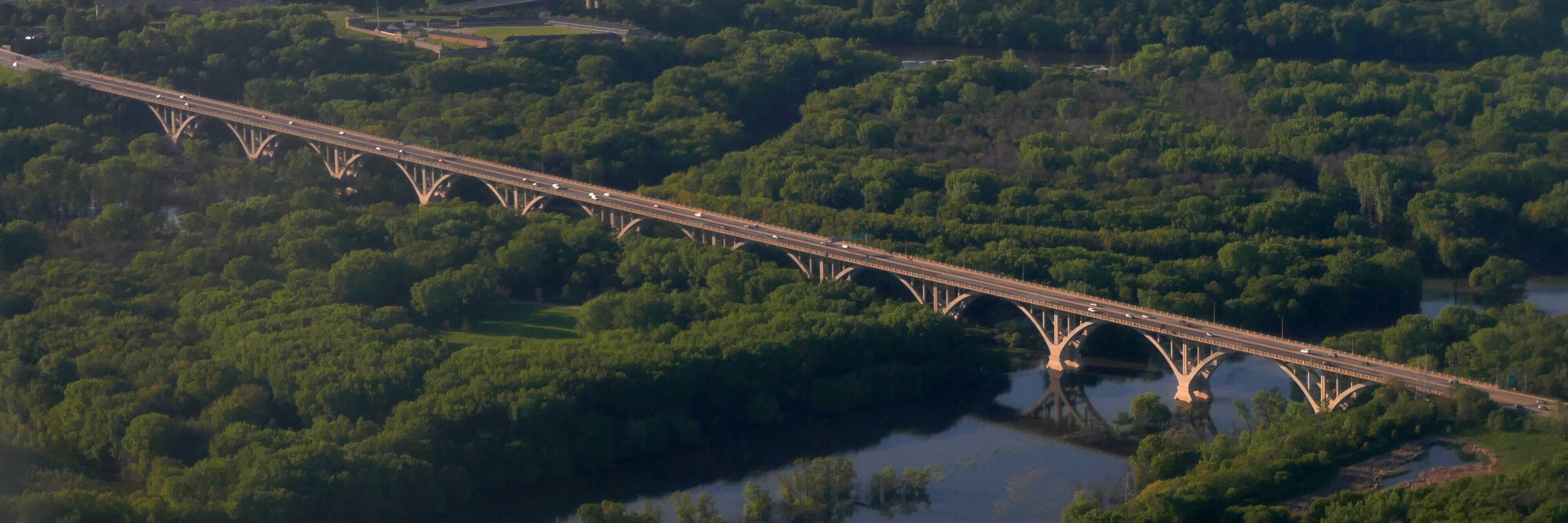
Walter Hall Wheeler designed the bridge that, for a time, was the longest of its kind in the world. He spent most of his career working alone out of a Minneapolis office, and over more than fifty years he shaped Minnesota's bridges, its public buildings, and the engineering of reinforced concrete itself.
From Potsdam to Minneapolis
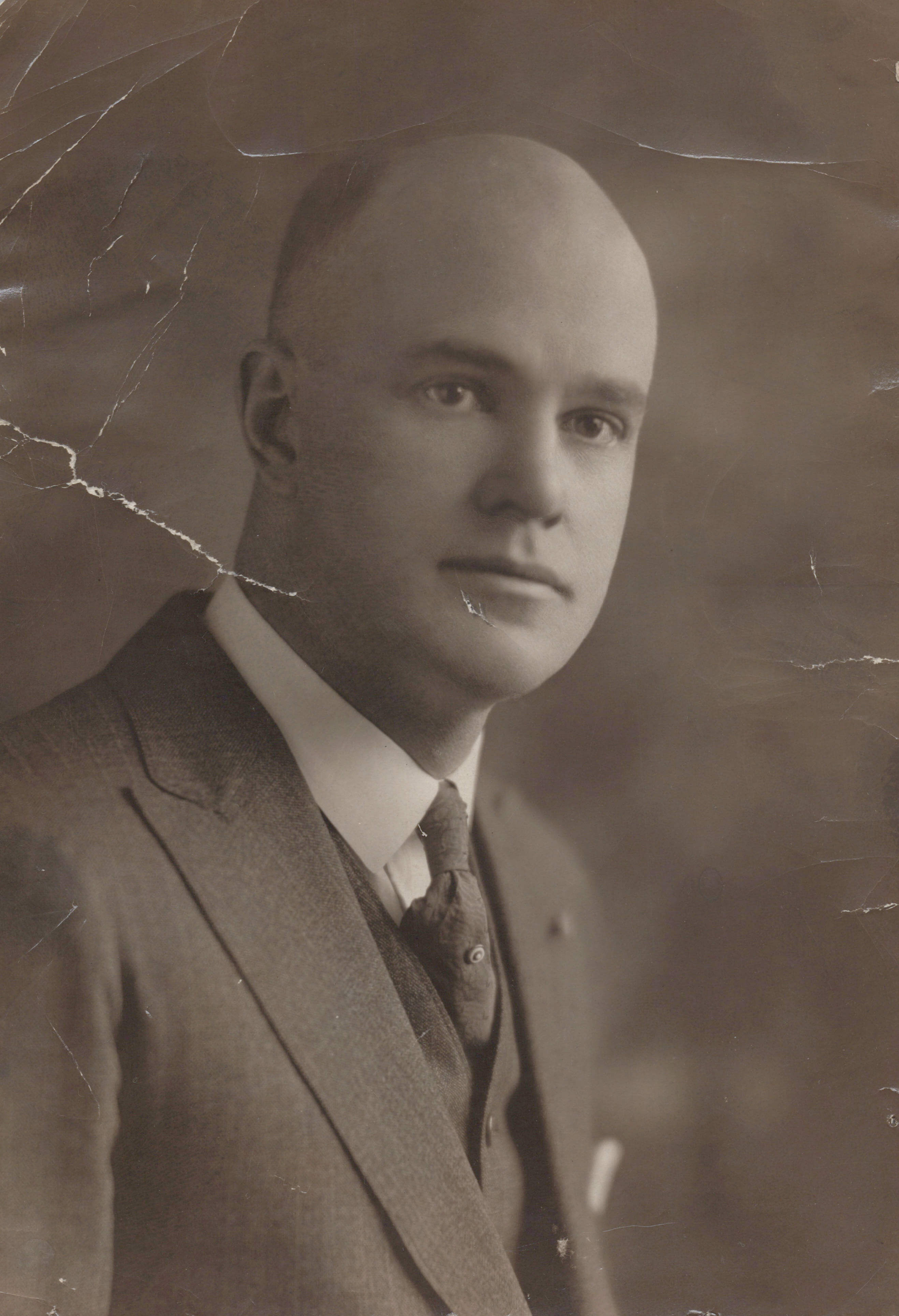
Walter H. Wheeler, photographed March 23, 1924.
Hennepin County Library, donated by the Star and Tribune Company.
Wheeler was born in Potsdam, New York, in 1883. He came to the University of Minnesota and graduated in 1906 with a degree in mining engineering, then turned to structural work early in his career. By 1912 he had opened the practice he would run, for the most part single-handedly, until 1968. Where many engineers of his era built large partnerships, Wheeler kept his own counsel and his own drafting table, taking on commissions that would have tested firms many times his size.
The Mendota Bridge
From 1923 to 1927, Wheeler served as consulting engineer for Hennepin County. His charge was the Mendota Bridge, and it became the work that defined him. Working with C.A.P. Turner, one of the country's foremost concrete engineers, Wheeler designed a structure of thirteen reinforced-concrete arches carrying the highway about 120 feet above the Minnesota River valley. When it opened on November 8, 1926, it was the longest continuous concrete-arch bridge in the world.
The opening matched the scale of the achievement. President Calvin Coolidge sent a telegram. Governor Theodore Christianson cut golden ropes to open the deck, and two caravans of some 15,000 cars met at the center of the span. The bridge was dedicated to the Gopher Gunners of the 151st Field Artillery, the Minnesota soldiers who died in the First World War. It still carries State Highway 55 today, and it has been listed on the National Register of Historic Places since 1979.
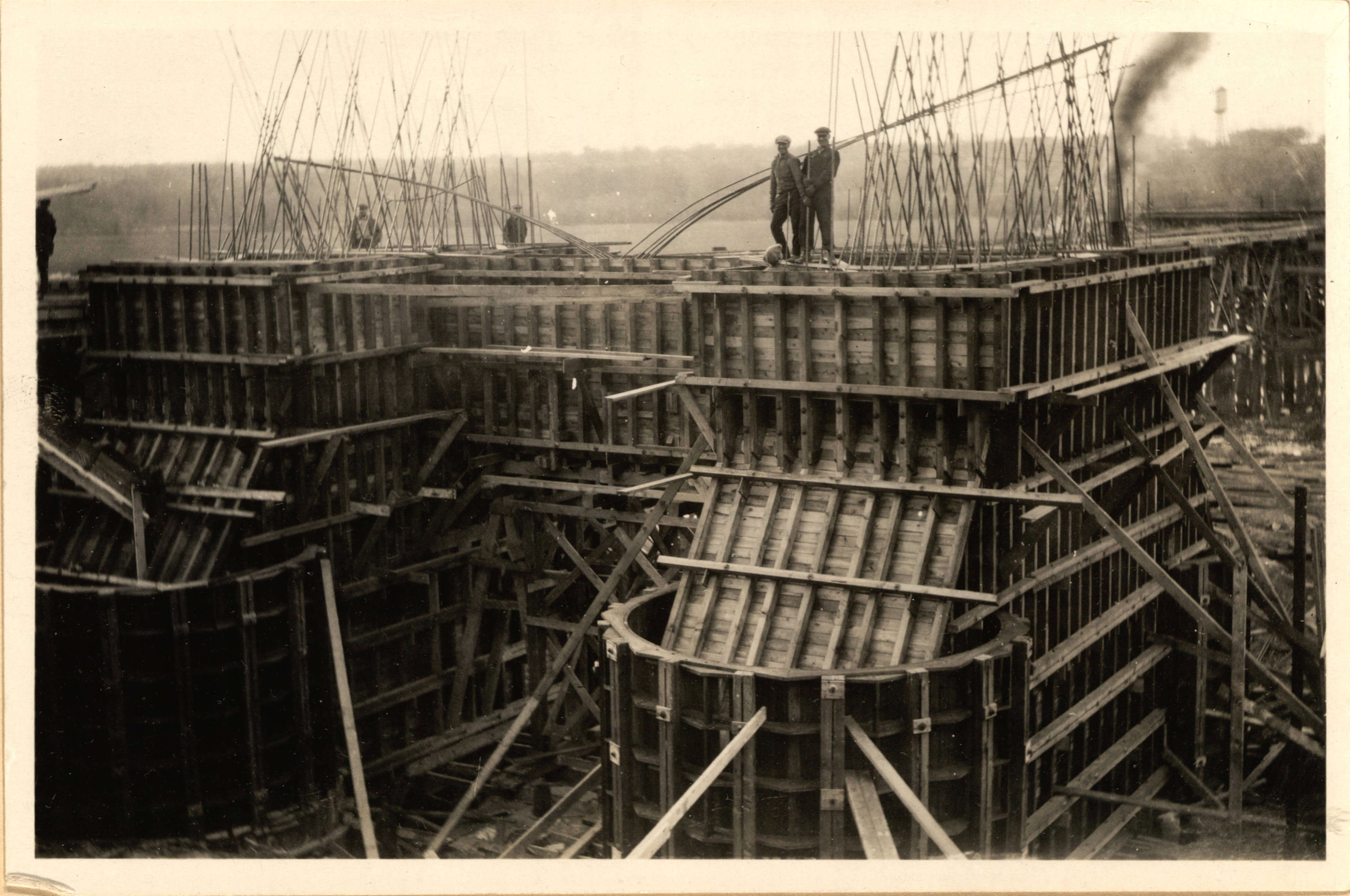
“The Mendota Bridge Under Construction - A Pier,” 1925. Workers stand atop the beginning of one of the concrete piers that will support the bridge, with wooden scaffolding and steel rebar showing the form of the concrete base. Apparently photographed by Wheeler himself.
Hennepin County Library, donated by the Star and Tribune Company.
The Mendota Bridge by the Numbers
An Innovator in Concrete
Wheeler's reputation rested on more than a single bridge. He held a patent for a reinforced-concrete flat-slab system, a method that let thin concrete floors and ceilings span widely spaced columns without deep supporting beams. The Minneapolis Armory, built in 1935 and 1936 and still standing downtown, used his approach to roof one of the largest column-free interiors in the city. The work placed Wheeler in the front rank of Minnesota's reinforced-concrete engineers, alongside Turner and the generation that made the state a center of the discipline.
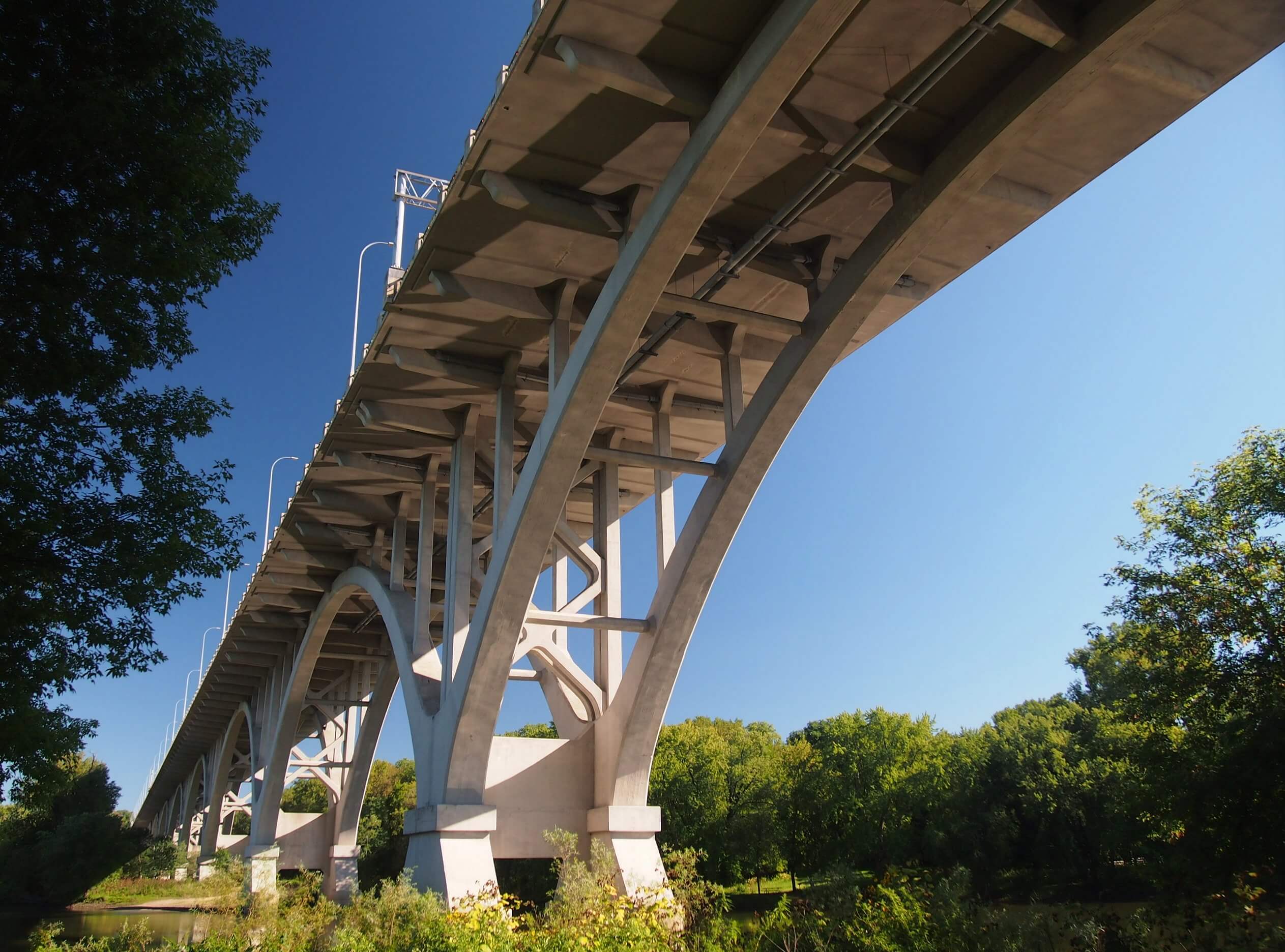
The Mendota Bridge's open-spandrel concrete arches, seen from below.
A Career Across Five Decades
Wheeler's project files, preserved at the University of Minnesota, run from 1912 to 1968 and reach well beyond bridges. They include Pioneer Hall at the University of Minnesota, the Fort Snelling Chapel, the Palo Alto City Hall in California, and commercial landmarks such as the Cream of Wheat Building. He was still designing bridges into his late seventies. In 1962 he engineered a skewed railroad bridge over U.S. Highway 61 near Two Harbors, solving a tight track curve with angled spans and piers. In 1968 he formed the firm of Wheeler & Tillitt and retired the same year.
Legacy
Walter Wheeler died in 1974. His papers, including project files spanning his entire career and family records reaching back to 1829, are held in the Northwest Architectural Archives at the University of Minnesota. He led ACEC Minnesota as president for the 1953–54 term, one in a long line of Minnesota consulting engineers whose work built the state's infrastructure. His monument, the Mendota Bridge remains in service nearly a century after he designed it.