
Why we advocate
ACEC Minnesota represents the business interests of consulting engineering firms in public policy and regulatory matters at the state and federal level. Our advocacy ensures that engineering expertise informs infrastructure investment, procurement policy, licensure standards, and workforce development decisions that shape Minnesota’s future.
Our members design and deliver the infrastructure that supports the state’s economy and quality of life. That work depends on predictable funding, fair procurement processes, professional standards, and long-term workforce capacity. Advocacy is how we protect and advance those conditions.
Our advocacy is structured, disciplined, and member-driven. We do not advocate on every issue. We focus on high-leverage areas where engineering expertise materially improves policy outcomes for the firms we represent and the public agencies they serve.
How we engage
Direct engagement with the Minnesota Legislature and executive agencies
Coordinated strategy with professional lobbyists
Partnership with ACEC National on federal policy
Issue briefings and position papers for policymakers
Testimony and formal comment during rulemaking processes
Member education and coordinated grassroots engagement
Federal engagement
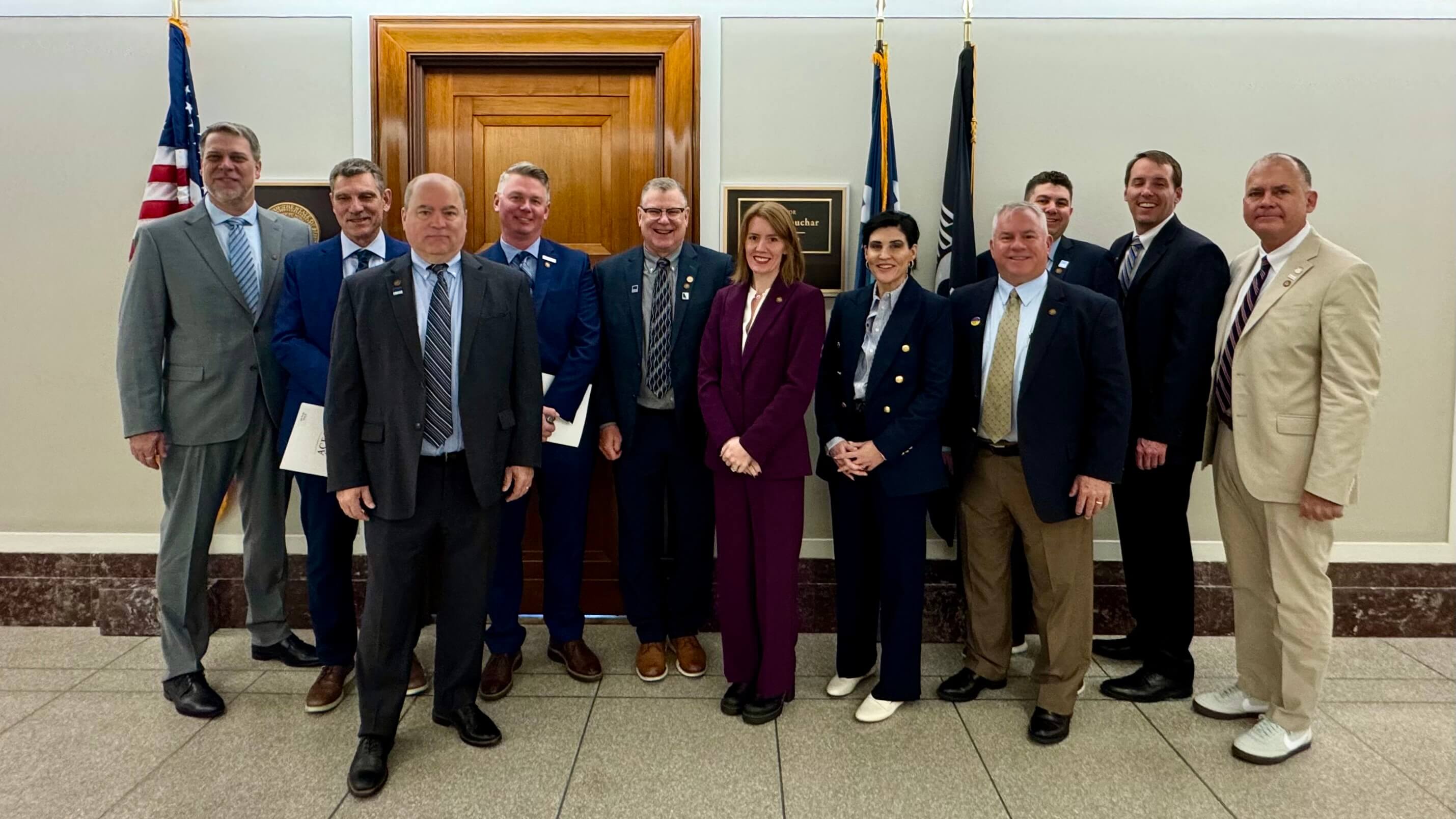
ACEC Minnesota engages in federal advocacy because federal procurement rules and federal infrastructure funding decisions shape the work pipeline for Minnesota consulting engineering firms. We coordinate closely with ACEC National and Minnesota’s congressional delegation, and we stay aligned with MnDOT and local agencies when federal policy affects on-the-ground delivery.
Surface transportation reauthorization
The current surface transportation authorization is included in the Infrastructure Investment and Jobs Act (IIJA). Congress must pass the next multi-year surface transportation reauthorization before the current law expires on September 30, 2026.
For Minnesota firms, reauthorization decisions drive core questions around formula funding vs. discretionary grants, project eligibility, program requirements, and the administrative friction that agencies and consultants absorb during delivery. We track reauthorization proposals as they emerge in the House Transportation & Infrastructure Committee and the Senate Environment & Public Works Committee, and we communicate their impacts in Minnesota to our delegation.
Federal agency procurement policy
Qualifications-based selection under the Brooks Act
The federal Brooks Act (40 U.S.C. §§ 1101–1104) requires federal agencies to publicly announce A/E requirements and select firms based on demonstrated competence and qualifications. Only after the most qualified firm is identified does the agency negotiate a fair and reasonable price.
These requirements are implemented in the Federal Acquisition Regulation (FAR Subpart 36.6) and, for federal-aid highway projects, through 23 U.S.C. § 112(b)(2) and 23 CFR Part 172. This framework matters in Minnesota because it establishes the federal baseline for professional services procurement and shapes state and local practices for federally funded projects.
ACEC Minnesota supports federal advocacy to defend and strengthen QBS and to oppose contracting reforms that collapse professional services into low-bid procurement models.
Federal-aid highway and transit procurement requirements
For federally funded highway projects, 23 CFR Part 172 governs the procurement and administration of engineering and design-related services. It requires public announcement of requirements, evaluation based on qualifications, ranking of firms, and negotiation of a fair and reasonable price. State DOTs and local agencies must comply with these requirements when federal funds are involved.
For transit projects, the Federal Transit Administration (FTA Circular 4220.1G) incorporates Brooks Act procedures for A/E services. The circular explicitly recognizes that architectural and engineering services must be procured through qualifications-based selection procedures consistent with federal statutes.
We monitor changes to FHWA and FTA guidance because revisions to federal regulations directly affect how Minnesota agencies structure solicitations, scoring criteria, and contract negotiations.
Overhead caps and cost principles in federal programs
Federal-aid highway law establishes guardrails on how agencies audit and apply consultant indirect cost rates for engineering and design-related services. Under 23 U.S.C. § 112(b)(2)(D), once a firm’s indirect cost rates are accepted, the contracting agency must apply them for contract estimation, negotiation, administration, reporting, and payment and “shall not be limited by administrative or de facto ceilings of any kind.”
Minnesota does not receive those protections. 23 U.S.C. § 112(b)(2)(F) explicitly excludes Minnesota (and West Virginia) from subparagraphs (B)–(E), which include the audit and cost-principles framework and the prohibition on indirect cost ceilings. As a result, Minnesota firms operate under a different federal-aid contracting environment than firms in the other 48 states.
This statutory exclusion is reflected directly in Minnesota’s contracting practices. MnDOT’s Office of Audit publishes annual guidance establishing maximum allowable overhead rates for engineering and design-related contracts. MnDOT contracts with a start date of April 15, 2019, or later have an overhead rate cap of 170%. Contracts with a start date on or after October 1, 2024, have an overhead rate cap of 175%. These caps function as administrative ceilings on otherwise audited rates. Because Minnesota is excluded from the federal protections in 23 U.S.C. § 112(b)(2)(B)–(E), MnDOT retains authority to impose those ceilings in a way that most other states cannot.
Parity in Engineering Act (H.R. 3258)
ACEC Minnesota supports the Parity in Engineering Act, which would put Minnesota in parity with the other 48 states by removing Minnesota from the federal exclusion. The bill amends 23 U.S.C. § 112(b)(2)(F) to strike “West Virginia or Minnesota” and leave only West Virginia in the exclusion.
Our position is that Minnesota firms should operate under the same federal-aid contracting guardrails as firms in the rest of the country. That parity supports fair competition, predictable contracting, and delivery capacity across the national engineering market.
How we engage federally
- Coordinate with ACEC National policy priorities and action alerts, especially on QBS and federal procurement reforms.
- Conduct targeted outreach to Minnesota’s congressional offices, focused on one or two high-leverage asks rather than volume, timed to committee and reauthorization windows.
- Translate federal changes into plain-language implications for Minnesota firms and public partners: what it changes, who it affects, and what to do next.
- Align, when appropriate, with MnDOT’s federal policy posture and reauthorization objectives to avoid mixed signals in Washington.
Political Action Committee
Supported by engineering professionals from across the country who work for member firms, the sole purpose of ACEC’s Political Action Committee is to elect candidates to the U.S. House of Representatives and U.S. Senate who support policies and legislation favorable to the engineering industry.
The PAC is overseen by a committee of Champions comprising engineering firm executives from all ACEC member organizations and is regulated by the Federal Election Commission. ACEC’s PAC is currently the largest federal PAC in the design industry. It supports candidates on a bipartisan basis and may give up to $5,000 to a federal candidate per election, and up to $10,000 per candidate for their federal election cycle. In the last election cycle, ACEC’s PAC had a winning percentage of 97%.
State engagement
ACEC Minnesota’s state advocacy drives meaningful engagement with the Minnesota Legislature and executive branch agencies to influence policy outcomes that affect how consulting engineering firms compete and deliver public infrastructure. Each session, ACEC Minnesota advances a set of legislative priorities that reflect the business realities of professional engineering and public safety accountability.
Capital investment
Minnesota funds large public infrastructure projects through capital investment bills authorized under Article XI of the Minnesota Constitution, which governs state bonding authority. ACEC Minnesota engages during even-year sessions when capital investment packages are negotiated. Advocacy in this lane focuses on:
- Ensuring public facilities projects remain viable and deliverable
- Aligning bonding timelines with agency capacity and consultant availability
- Supporting predictable capital investment pacing
- Addressing technical eligibility requirements for state bond funding
Because bonding bills often move late in the session and are highly negotiated, engagement in this lane requires sustained coordination with legislative leadership and agency capital budget staff.
Additionally, Minnesota periodically revisits its transportation funding structure, including trunk highway funding, gas tax indexing, motor vehicle sales tax allocations, and general fund transfers. ACEC Minnesota engages on:
- Long-term sustainability of transportation funding
- Alignment between funding commitments and MnDOT’s State Transportation Improvement Program (STIP)
- Implementation mechanics of transportation finance legislation
- Risk allocation and contract framework implications of alternative delivery methods
State agency procurement policy
Minnesota’s procurement of professional and technical services is governed by Minn. Stat. § 16C.087, which establishes a qualifications-based selection framework for certain professional services. Under this statute, agencies must evaluate qualifications before negotiating compensation. ACEC Minnesota engages on:
- Protecting statutory QBS language in § 16C.087
- Preventing drift toward lowest-cost evaluation models for professional engineering services
- Clarifying implementation guidance issued by the Minnesota Department of Administration
- Ensuring consistency between state statute and federal-aid procurement requirements
- Disadvantaged Business Enterprise (DBE) participation requirements tied to federal funding
- Targeted Group Business (TGB) and Veteran-Owned Small Business programs administered at the state level
State engagement in this lane often involves committee testimony in the House and Senate State Government Finance and Transportation Committees, and coordination with agency procurement staff.
Professional licensure
Engineering licensure in Minnesota is governed by the Board of Architecture, Engineering, Land Surveying, Landscape Architecture, Geoscience, and Interior Design (AELSLAGID) under Minn. Stat. § 326. ACEC Minnesota engages when:
- Licensure eligibility rules are revised
- Education pathway requirements are modified
- Examination access is debated
- Administrative rulemaking affects firm ownership or responsible charge standards
Because rule changes often occur administratively rather than legislatively, this lane requires monitoring board rulemaking calendars and participating in public comment periods.
Construction codes and administrative rulemaking
Minnesota’s construction codes are adopted through administrative rulemaking under Minn. Stat. § 326B. The Plumbing Board, the Board of Electricity, and the Board of High Pressure Piping Systems hold rulemaking authority in their respective areas, and the Department of Labor and Industry administers and enforces the resulting rules. Adopted code carries the force of law and sets design requirements that our members must meet on every project.
Code changes move on rulemaking calendars rather than legislative ones, developed in ad hoc committees over a period of years with no bill number to track. ACEC Minnesota engages when a proposed code change would:
- Apply prescriptive requirements to systems that are designed by a licensed professional engineer
- Duplicate or conflict with requirements already administered by another state agency
- Extend a code’s jurisdiction to systems it has not previously covered
- Shift cost, permitting burden, or liability onto design professionals and public owners without a supporting analysis
- Incorporate copyrighted material by reference in a way that limits public access to the requirements being adopted
Current matter: Uniform Plumbing Code Chapter 15
The Plumbing Board is considering adoption of Chapter 15 of the 2024 Uniform Plumbing Code, Alternate Water Sources for Nonpotable Applications, into the Minnesota Plumbing Code at Minn. R. ch. 4714. Chapter 15 was not included in the 2020 or earlier Minnesota Plumbing Code. Stormwater capture and reuse is already governed by the Pollution Control Agency, the Department of Health, the Department of Natural Resources, and regional and local authorities. The work is being carried out by the Board’s 2024 UPC ad hoc Chapter 15 Rulemaking Committee, whose meetings are open to the public. Members who want current status or who have project experience with stormwater reuse systems should contact the ACEC Minnesota office.
Emerging issues
PFAS liability and environmental regulation (Amara’s Law)
In 2023, Minnesota enacted sweeping PFAS legislation commonly known as Amara’s Law (2023 Minn. Laws, Ch. 60), which phases out intentionally added PFAS in consumer products and establishes reporting, product bans, and regulatory authority through the Minnesota Pollution Control Agency (MPCA).
While primarily aimed at manufacturers, the law has downstream implications for environmental site assessments, remediation design standards, municipal water system upgrades, stormwater and wastewater design, and consultant liability exposure in environmental work. The statute grants the MPCA authority to adopt rules and establish reporting and compliance frameworks. As rulemaking proceeds, engineering firms may face evolving design criteria, testing requirements, and documentation obligations. We monitor rulemaking activity and liability implications to ensure that engineering professionals are not inadvertently assigned regulatory responsibilities that exceed statutory intent.
Data center energy and water policy
Minnesota has seen significant legislative and regulatory attention on large-scale data centers, particularly regarding high-volume energy consumption, water use for cooling systems, impacts on grid capacity, and siting and environmental review thresholds. Recent sessions have included proposals affecting how large energy-intensive facilities are regulated under state environmental policy law.
Engineering firms play a direct role in site design, energy modeling, cooling system design, and infrastructure integration. Changes in state environmental review thresholds or reporting standards directly affect schedule and permitting complexity.
Sales tax on professional services
Minnesota has periodically debated expanding the state sales tax base to include certain professional services, including consulting. While not enacted, proposals have surfaced in omnibus tax discussions that would apply sales tax to previously exempt services. For engineering firms, this would increase client costs, complicate billing structures, create competitive disparities between public and private projects, and introduce administrative compliance burdens.
Campaign Fund
The ACEC Minnesota Campaign Fund is a registered state political fund operating under Minnesota Statutes § 10A and regulated by the Minnesota Campaign Finance and Public Disclosure Board.
The Campaign Fund is separate from ACEC Minnesota’s general operating budget and is used exclusively to support state legislative and constitutional office candidates who understand and support sound infrastructure policy, qualifications-based procurement, and a strong engineering workforce.
Legislative priorities
Each session, ACEC Minnesota advances a focused set of priorities on infrastructure investment, procurement policy, and professional licensure.
View our prioritiesSupport the Campaign Fund
The Campaign Fund supports state candidates who understand sound infrastructure policy, qualifications-based procurement, and a strong engineering workforce.
Learn about the fund